


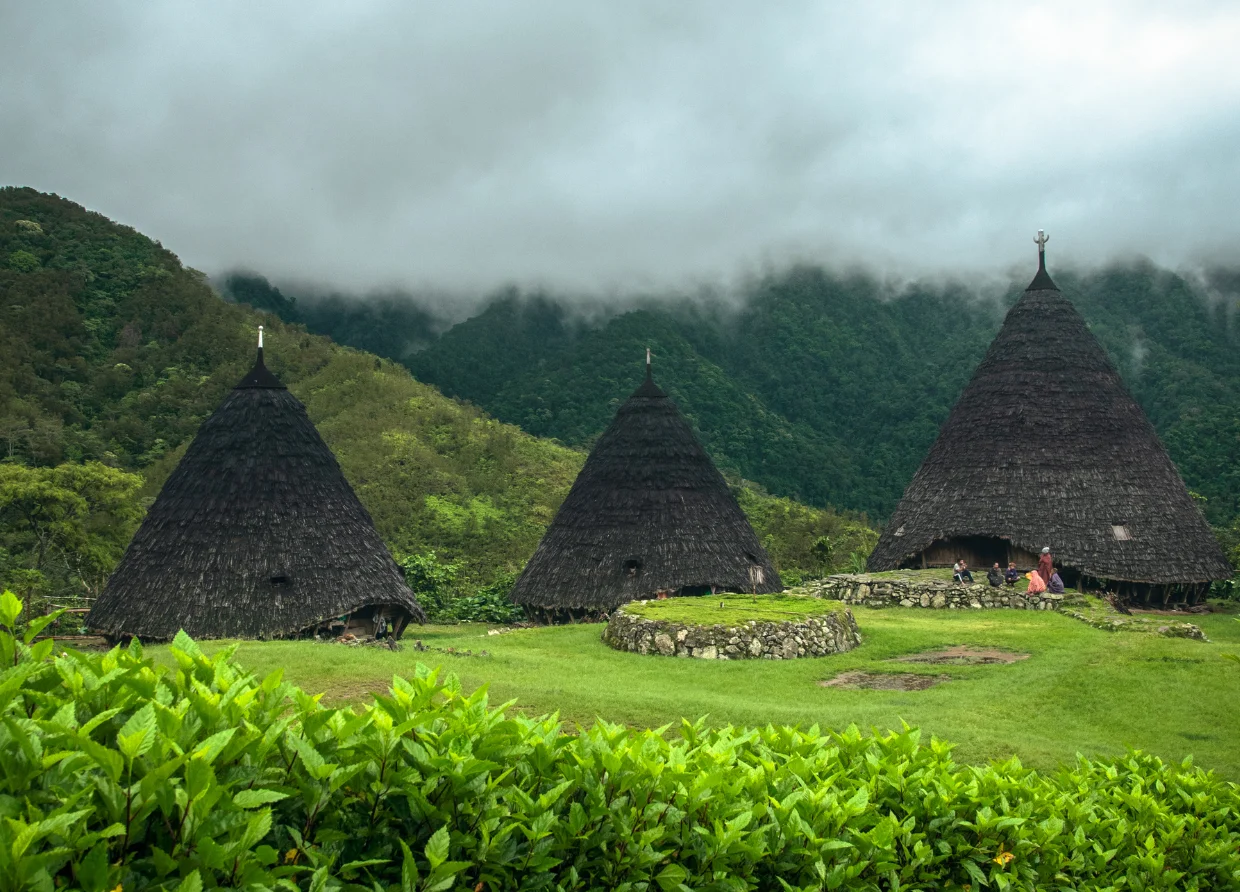
WAE REBO: WHERE INDONESIA LOOKS LIKE THE HIMALAYAS
Wae Rebo in Flores sits above the clouds at 1,100 meters. Time Out named it the world's second most beautiful village. Here is what it looks like inside.
In March 2024, Time Out London published a list of the 16 most beautiful villages and small towns in the world. Number one was Rothenburg ob der Tauber in Germany. Number two was a village in the mountains of Flores, East Nusa Tenggara, that most Indonesians have never visited and that most international travelers have never heard of.
Wae Rebo sits at 1,100 meters above sea level. There is no road that goes there. There is no phone signal when you arrive. The Milky Way is visible with the naked eye on clear nights because there is nothing around for miles that produces light pollution. And seven cone-shaped houses, each 15 meters high, built without a single nail from natural materials by the Manggarai community, have been standing in the same mountain clearing for centuries.
Time Out described Wae Rebo as a village with beautiful views that should not be missed. The Spectator Index, a separate international publication, independently named it the world's second most beautiful small town the same year. Two publications. Two lists. The same village in Flores, East Nusa Tenggara.
If you have been following Indonesia's year on the global stage in 2026, from Guinness World Records cave art in Sulawesi to UNESCO Geoparks, Wae Rebo is the version of that story that has been hiding in plain sight since 2012, when UNESCO gave it the Asia Pacific Heritage Award for Outstanding Structure. The world already knows it is remarkable. The question is whether Indonesians have caught up.
What Wae Rebo Is and Why It Looks Like the Himalayas
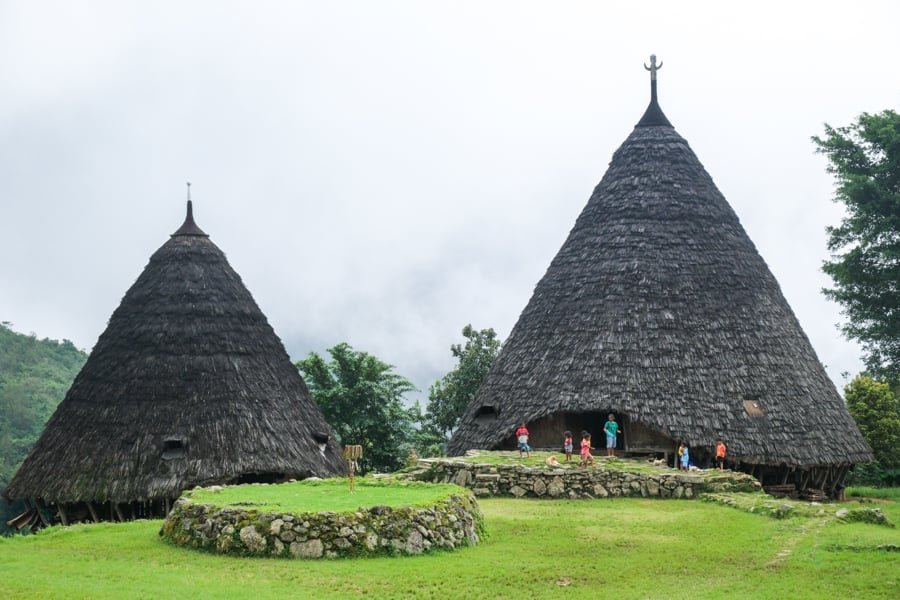
The seven Mbaru Niang of Wae Rebo. Built without a blueprint. Built the same way they have been built for centuries
Wae Rebo is a traditional Manggarai village hidden in the highlands of western Flores, accessible only by a three to four hour jungle trek from Denge village. It received the UNESCO Asia Pacific Heritage Award for Outstanding Structure in 2012, recognized for the community's preservation and rebuilding of the traditional Mbaru Niang houses based on the spirit of community cooperation toward sustainable tradition.
The seven Mbaru Niang houses, whose name translates as drum houses in the Manggarai language, are not just architecture. They are a worldview made physical. Each house is built in a perfect circle, 15 meters high, with a thatched cone roof that descends almost to the ground and holds multiple families inside. The second level, called lobo, stores food and goods. The third level, called lentar, stores seeds for the next harvest. The fourth level, called lempa rae, reserves food stocks in case of drought. The fifth and top level, called hekang kode, the most sacred, holds offerings for the ancestors.
The landscape surrounding Wae Rebo is as significant as the village itself. From the clearing where the seven Mbaru Niang stand, the view in every direction is the same: rolling green hills, dense forest, valley mist gathering in the lower elevations, and the specific quality of mountain silence that arrives when there is no road nearby and no engine running. The village does not just sit in the mountains. It belongs to them. The Mbaru Niang houses, with their cone roofs and circular walls, echo the rounded hills that surround them, as if the architecture was designed to make the building and the landscape indistinguishable from a distance. On clear mornings, the mist rolls through the clearing before the sun reaches the valley, and for twenty minutes or so, the world outside the village does not exist.
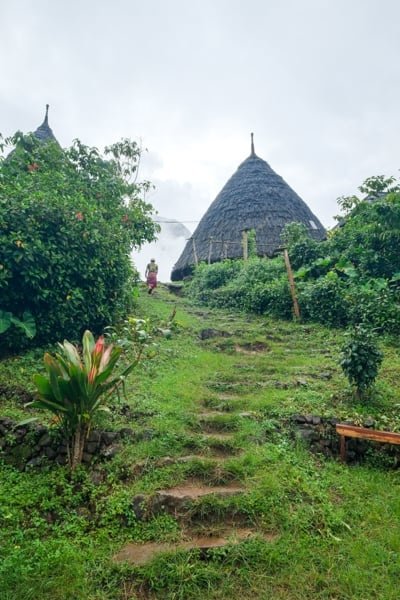
Wae Rebo surroundings Flores Indonesia panoramic rolling green hills valley mist
The Himalayan comparison arrives not through similarity of culture but through similarity of feeling. Both are mountain communities above the clouds. Both have architecture so specific to their landscape that it could not exist anywhere else. Both reward the effort to reach them with something that tourism cannot manufacture. The difference: Bhutan charges a minimum daily fee of USD 200 and requires a licensed tour operator. Wae Rebo charges an entry fee of approximately Rp225,000 per person, which includes breakfast, lunch, dinner, and a welcome drink.
A population of around 1,200 people lives across the seven houses. Around the village they grow coffee, vanilla, and cinnamon, sold at a market 15 kilometers away. Nothing about Wae Rebo has been optimized for anyone's convenience. That is precisely the point.
The Trek, the Stay, and the Sky Nobody Expected
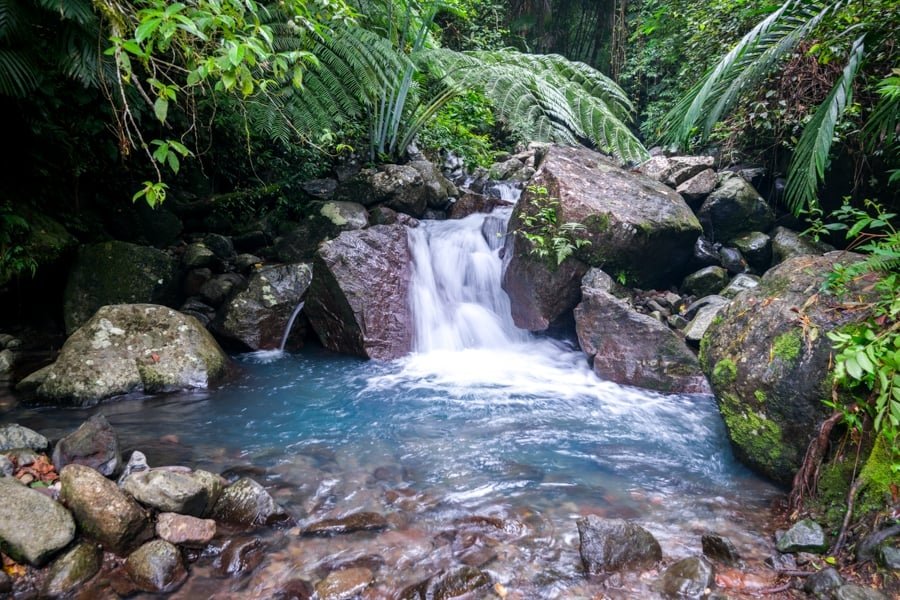
The waterfall near Wae Rebo. Most people who make the trek never find it.
The journey begins in Labuan Bajo, the closest city with an international airport, accessible by direct flight from Jakarta, Bali, Singapore, and Kuala Lumpur. From Labuan Bajo, the drive to Denge village, the trailhead, takes four to five hours. The road climbs slowly into the highlands, the air changes, and the landscape opens into hills, rice terraces, and the kind of silence that does not feel empty.
From Denge, the trek covers approximately seven kilometers and takes three to four hours. The path is narrow and can be slippery during the wet season. It passes through dense rainforest with ferns, orchids, and palm trees, accompanied by birdsong from species endemic to the Flores highlands. There is also a waterfall near the trail that most people who make the trek never find, tucked into the forest on the way up, audible before it is visible.
When you arrive, the village greets you with a welcome ceremony, a ritual performed for every visitor since the community opened to guests. You are received not as a tourist but as family. You are given a place to sleep inside a Mbaru Niang. Meals are shared with villagers. Coffee and vanilla grown in the surrounding gardens arrive with breakfast. On clear mornings, mist rolls through the clearing before the sun reaches the valley, and for twenty minutes or so, the world outside the village does not exist.
At night, Wae Rebo becomes a different place entirely. With no phone signal and no artificial light for miles in any direction, the village sits in a darkness that most Indonesians have never experienced. The Milky Way appears above the clearing with a clarity that is only possible at 1,100 meters above sea level, away from every city, every road, and every source of light pollution. The seven Mbaru Niang stand below it, their cone roofs silhouetted against a sky that looks the way skies looked before electricity arrived. Photographer Satya Winnie captured this exact moment, and the image has since been shared across the internet by people who could not believe it was Indonesia.
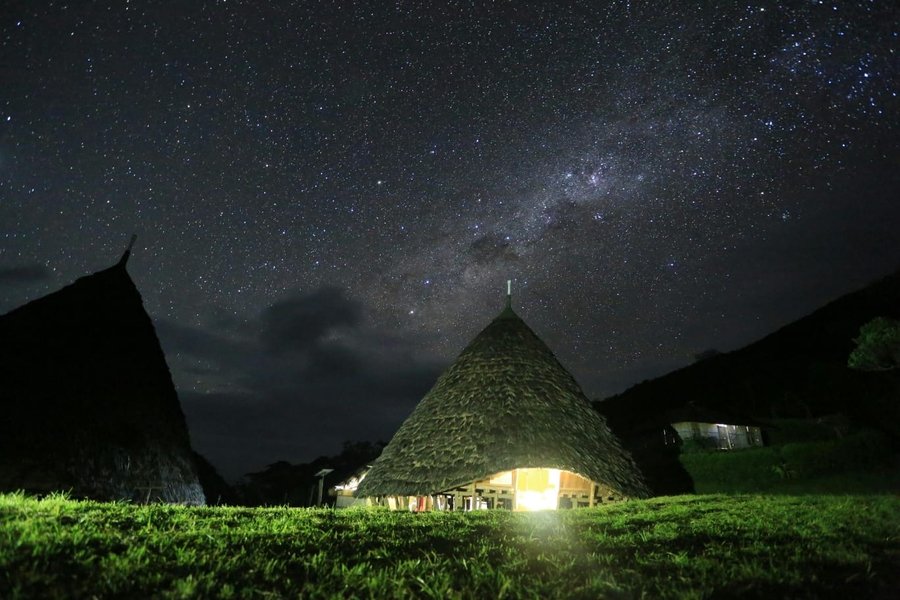
Wae Rebo at midnight. The Milky Way above the Mbaru Niang.
It is Indonesia. Specifically, it is a clearing in the mountains of Flores at midnight, under the full Milky Way, in the world's second most beautiful village. There is no reservation system. There is no daily visitor limit. You do not need to book anything in advance. After Wae Rebo, the road east toward Ruteng offers further Flores experiences: the Cancar Spider Web Rice Fields and Liang Bua Cave, where the fossils of Homo floresiensis were discovered. Flores rewards the traveler who goes further.
You Might Also Want to Read
Indonesia's Best Hidden Gems Beyond Bali: Five Islands — rsvpclique.com
Togean Islands: Indonesia's Hidden Gem Worth the Journey — rsvpclique.com
The World's Second Most Beautiful Village Is Already Here.
Wae Rebo is located in Manggarai Regency, Flores, East Nusa Tenggara. Fly to Komodo International Airport in Labuan Bajo, drive four to five hours to Denge village, then trek three to four hours to the village. Entry fee approximately Rp225,000 per person including all meals. No reservation required. Best time to visit: May to October during the dry season.
Sources of Photos :
Satya Winnie Official Instagram — @satyawinnie
The World Travel Guy - theworldtravelguy.com
Wonderful Indonesia Official — @wonderfulindonesia
Frequently Asked Questions
#Wae Rebo #Flores #Manggarai #Mbaru Niang #East Nusa Tenggara #Labuan Bajo #Himalayas Indonesia
