


WELCOME CLUBS INTERNATIONAL: INDONESIA HOSTS WCI 2026
Welcome Clubs International held its 17th Biennial Conference in Jakarta, Yogyakarta, and Bali in April 2026. Here is why Indonesia was chosen.
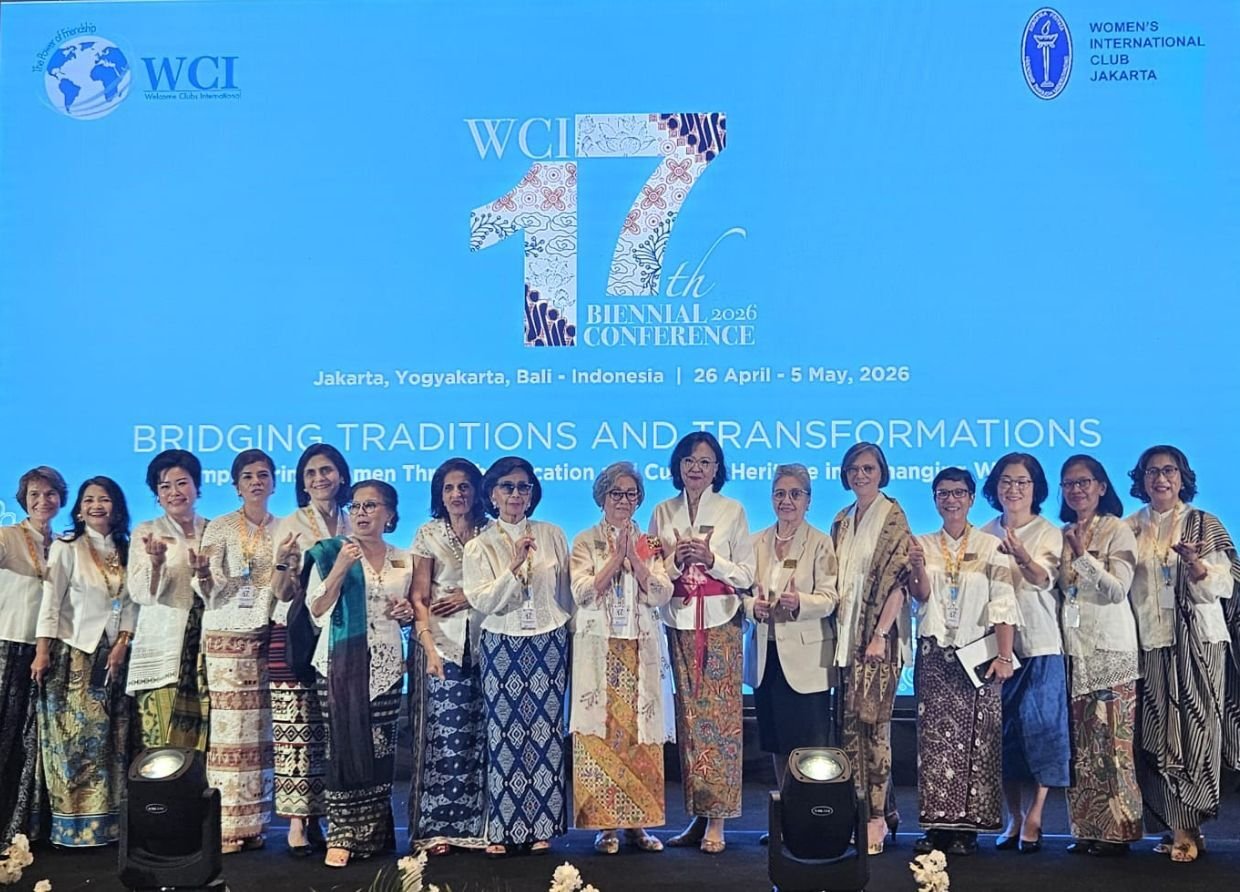
In the ballroom of The Westin Hotel in Kuningan, Jakarta, on the morning of April 27, 2026, women from clubs across the world stood for Indonesia Raya. It was the opening of the 17th Biennial Conference of Welcome Clubs International, and it was the first time the organization had held its flagship gathering in Indonesia.
The choice of venue was not incidental. The theme was Bridging Traditions and Transformations: Empowering Women Through Education and Cultural Heritage in a Changing World. If there is a country that embodies both of those tensions simultaneously, it is Indonesia in 2026.
If you have been following Indonesia's year on the global stage, from Cannes to Venice to the Asian Beach Games, this is the version of that story that arrived through international women's diplomacy rather than film or sport.
What WIC Jakarta Is and How It Started
The Women's International Club Jakarta's journey started in the year 1950, when four friends from Indonesia, the United Kingdom, the United States of America, and Prinsgesolide from different parts of the world got together with the Embassy, the Ambassador's wives of Indonesia in Jakarta. The specific purpose was to provide a Club for the opportunity to meet each other and make friends of all nations, share ideas, be in respect and understanding. Thus, WIC Jakarta was born.
It started with ten members and in the span of one year, membership had grown to sixty. Today, the club has over 300 members from 25 different nationalities.
The club's motto is Friendship Through Understanding, represented by a lotus-shaped torch. The lotus blossom is a symbol of friendship and the flame signifies the enlightenment of understanding between women of different cultures. The four aims of WIC Jakarta are to foster friendship and mutual understanding between women of different nationalities, to contribute to the cultural development of women in general, to promote the cause of education, and to enrich social improvement.
What Welcome Clubs International Is and Why This Conference Matters
Welcome Clubs International is a global organization founded on the principle of friendship across borders, connecting women and families who relocate internationally through a network of clubs in cities across the world. The Women's International Club Jakarta served as the host organization for the 17th Biennial Conference under the presidency of Mrs. Tari Arsita Boestami for the 2026 to 2028 term.
In her welcome message, Mrs. Tari Arsita Boestami wrote: "This gathering is a beautiful opportunity to connect, share ideas, inspiration, friendship, and joy. It unites us. You come bringing richness and meaning to this conference. We hope you will find traditions and cultural heritage of Jakarta, Yogyakarta, and Bali enriching and memorable. We wish you a wonderful conference and an unforgettable stay."
Dr. Nina Handoko, Chairwoman of the 17th Biennial Conference, added: "This conference is not only a gathering. It is a shared journey. Under our theme, we are invited to reflect on the role we each play in preserving what matters. WCI clubs are rooted in friendship, but they are also quietly powerful spaces of impact, where women learn from one another, support their communities, and carry forward traditions that shape identity and belonging. May this conference leave you not only with meaningful insights, but with renewed purpose and lasting connections."
The official opening on April 27 featured keynote speaker Dr. Jung Sook Kim, President of the Welcome to Korea International Club, Chairperson of the Korean Institute of Women's Politics, and Immediate Past President of the International Council of Women. The honorary guest address was delivered by Dr. Amurwani Dwi Lestariningsih, Deputy Minister of Gender Equality at the Ministry of Women Empowerment and Child Protection of Indonesia.
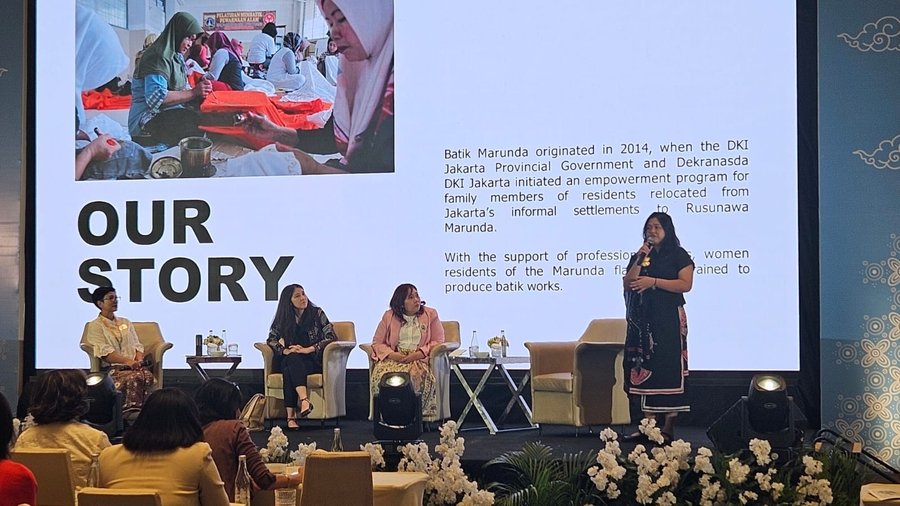
Batik Marunda on the panel stage. A batik born from relocation now representing Jakarta to the world.
Three Cities. What the Journey Actually Looked Like.
Three cities. Six days. Each one chosen to make a different argument about what Indonesia is.
Jakarta was the opening chapter. The formal diplomatic setting of The Westin Hotel in Kuningan, the official conference opening with keynote speakers and government representatives, the Gala Dinner marking the WCI Anniversary and Marian Adair Award, and a Kota Tua tour that placed the delegates inside the oldest layer of the city they were gathering in. Jakarta said: this country is serious, internationally connected, and ready to host the world.
Yogyakarta was the emotional core. The journey there began at 4:30 AM from Gambir Train Station, with breakfast and lunch served on the rails through Java. It continued through a batik workshop in Giriloyo, a sharing session on Women Empowerment with PPBI Sekar Jagad, Borobudur at dawn before the tourist crowds arrived, shopping at Lalawuh Sunda, and an afternoon at Paku Alam Royal Palace arriving by andong and becak. The Yogyakarta days were built around one idea: that the most significant traditions are the ones still being lived, not preserved behind glass. The Royal Gala Dinner and Closing Ceremony at Novotel Suites ended the main program on the evening of April 30.
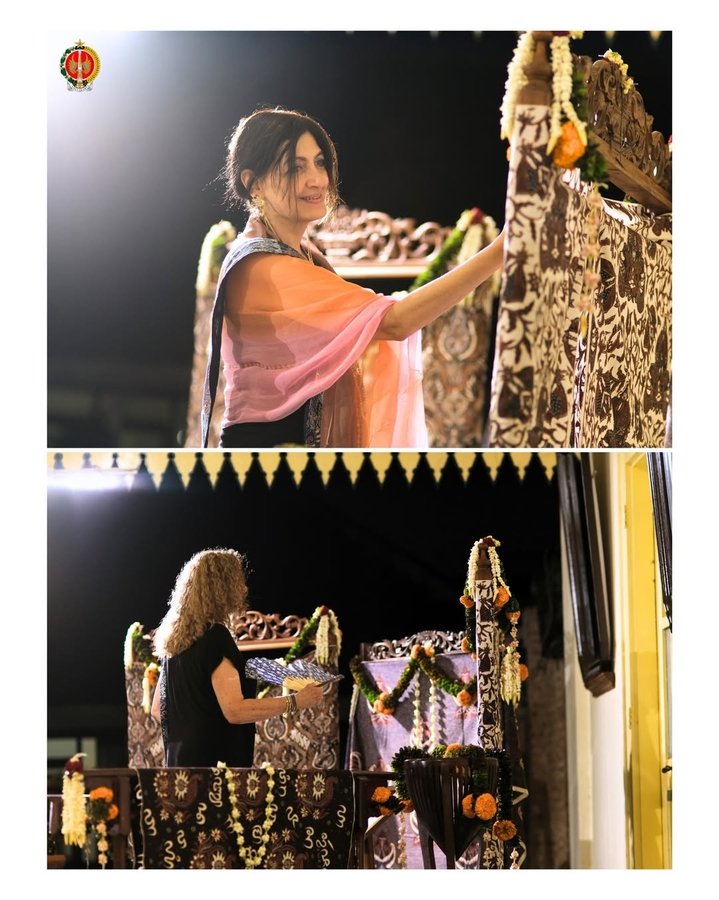
Giriloyo, Yogyakarta. Twenty-five nationalities. One canting. This is how batik introduces itself.
Bali was the optional coda, and perhaps the most concentrated expression of the conference theme. The post-conference program from May 1 to 5, hosted at Grand Hyatt Sanur and Hyatt Regency Bali, was not a resort holiday. It was a deliberate immersion in Bali's living creative heritage: a textile art fashion show by Dr. Tjokorda Istri Ratna C.S. from The Bali Institute of the Arts, a traditional bazaar featuring the works of local weavers and artisans, a visit to the ancient Bali Aga village of Tenganan Pegeringsingan where the rare double ikat Geringsing weaving tradition is still practiced, and a Farewell Dinner at Kerambitan Royal Palace.
A welcome dinner hosted by Ni Luh Putu Putri Suastini, spouse of the Bali Governor and Chairwoman of the Regional Craft Council, opened the Bali program. It was a fitting frame: a conference about women, education, and cultural heritage, welcomed to Bali by the woman leading the island's most significant craft preservation initiative.
Three cities. One argument: Indonesia does not need to choose between tradition and transformation. It has always been both.
Why Indonesia Was the Right Choice for This Conference
The answer to why Indonesia was chosen is not diplomatic courtesy. It is structural.
Jakarta has recently been recognized by the United Nations as the world's most populous urban agglomeration, with an estimated 42 million people living in its greater metropolitan area. The city contributes roughly 17 to 18 percent of Indonesia's GDP and stands at the forefront of global conversations on urban resilience, sustainability, and inclusive development. As Jakarta approaches its 500th anniversary, it is simultaneously celebrating five centuries of history while shaping what the next chapter of one of the world's great cities looks like.
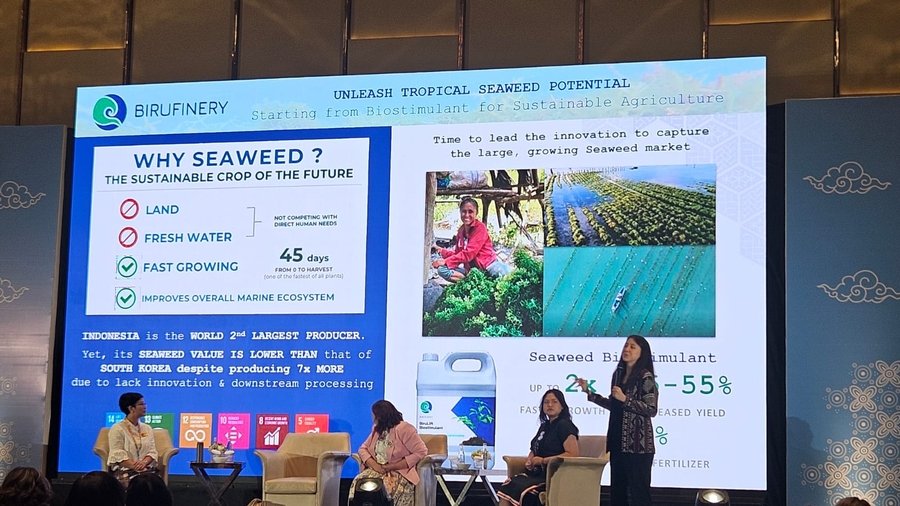
WCI Biennial Conference 2026 panel discussion Birufinery seaweed sustainable agriculture Indonesia Jakarta
But the deeper answer is cultural. Indonesia is a country of 17,000 islands, 300 ethnic groups, and more than 700 living languages. It is home to Borobudur and batik, to the double ikat weavers of Tenganan and the kraton traditions of Yogyakarta, to a culinary heritage that spans the entire archipelago and a creative economy that is now going global. Bhinneka Tunggal Ika, Unity in Diversity, is not a slogan. It is the organizing principle of a nation that has been practicing it for centuries.
For a conference whose theme is Bridging Traditions and Transformations, no country in the world makes that argument more naturally than Indonesia. The traditions are living. The transformation is visible. And the women carrying both forward are everywhere.
That is why the 17th Biennial Conference of Welcome Clubs International chose Indonesia. And why the three cities it moved through across six days, Jakarta, Yogyakarta, and Bali, were not incidental choices but deliberate ones. Each city carried a different piece of the same argument. Together, they made the case that Indonesia has always been exactly this: a place where the world's most complex traditions and its most dynamic transformations coexist, and where women have always been at the centre of both.
You Might Also Want to Read
Indonesia Returns to Venice Biennale 2026 With 21 Etchings — rsvpclique.com
Learn More About WCI Jakarta.
The 17th Biennial Conference of Welcome Clubs International concluded its main program on May 1, 2026, with the optional Bali post-conference program running until May 5. For more information, visit wic-jakarta.or.id
Sources of Photos
All photography from the WCI 17th Biennial Conference 2026 was sourced from official conference documentation and the official program booklet provided by Women's International Club Jakarta.
Women's International Club Jakarta Official — wic-jakarta.or.id
Kominfo DIY official Instagram @kominfodiy
R.S.V.P. CLIQUE Documentation — rsvpclique.com
Frequently Asked Questions
#WCI 17th Biennial Conference 2026 #Women's International Club Jakarta #Welcome Clubs International #Tari Arsita Boestami #Nina Handoko #Borobudur #Batik Giriloyo #Paku Alam Royal Palace #Tenganan Pegeringsingan #Kerambitan Royal Palace #Bhinneka Tunggal Ika #Jakarta 500 years #Friendship Through Understanding #Geringsing
