


BIOPHILIA: EXQUISITE CORPSE EXHIBITION REFLECTING ECOLOGICAL AWARENESS AT ISA ART GALLERY
A compelling showcase exploring humanity’s fragile connection with nature through collaborative and thought provoking visuals
Environmental issues are often seen as distant problems that have little connection to everyday life. In reality, their impact often begins with simple daily activities at home, such as leftover food being thrown away, the increasing use of single use packaging, and the steady growth of household waste. Since the pandemic, when homes became the center of work, study, and daily routines, the rise in domestic waste has become even more noticeable. This situation reminds us that the ecological crisis is not only created by large industries, but also by small habits that happen repeatedly over time.
This awareness forms the foundation of the exhibition Biophilia: Exquisite Corpse at ISA Art Gallery, Wisma 46, Jakarta. The exhibition is presented as a curatorial response to the increasingly urgent global ecological crisis. Deborah Iskandar, Founder and Director of ISA Art Gallery, views the growth of household waste as a moment for reflection and an opportunity to present environmental themed exhibitions more consistently. After introducing the theme Shattering Illusion in 2024, the gallery continues this initiative this year with a more collaborative and conceptual approach.
The term biophilia refers to a deep love and appreciation for living systems. In the context of this exhibition, it represents an awareness that humans are not separate from nature but are part of an interconnected ecological network. Every human action carries consequences, and every decision leaves a trace. Through this perspective, the exhibition invites visitors to rethink the relationship between humans and the earth, not as an exploitative relationship but as one built on mutual care and responsibility.
The theme Exquisite Corpse, meanwhile, comes from a collaborative method in surrealist practice that was revisited through the research of Elza Adamowicz in 1998. The method combines fragments of ideas from different individuals into a single composition that is unexpected yet still connected. This principle becomes the curatorial strategy of the exhibition. Each artist presents fragments of ideas about the earth, the relationship between humans and nature, resource extraction, and sustainability. When these works are brought together in the same space, they form a layered and evolving collective dialogue.
The exhibition features artists from different generations and artistic backgrounds, including Teguh Ostenrik, Anang Saptoto, Arahmaiani, Cynthia Delaney Suwito, Dabi Arnasa, Fitri DK, Reza Kutjh, Studio Birthplace, and Mater Design Lab. The mediums used are equally diverse, ranging from installations, sculptures, and film to textiles, photography, and experimental material explorations. This variety highlights that sustainability cannot be understood from a single perspective but requires many voices and approaches.
Among the works presented are Selamatan Bumi and Tenda Perjuangan by Fitri DK, both rooted in the struggles of the Kendeng community. Selamatan Bumi is inspired by the Kupatan Kendeng ritual, a symbolic act of acknowledging mistakes and asking forgiveness not only from fellow humans but also from the earth. Tenda Perjuangan refers to the protest tents set up by local residents at mining sites and government offices. In the exhibition, these tents are transformed into textile works that function as an archive of community resistance.
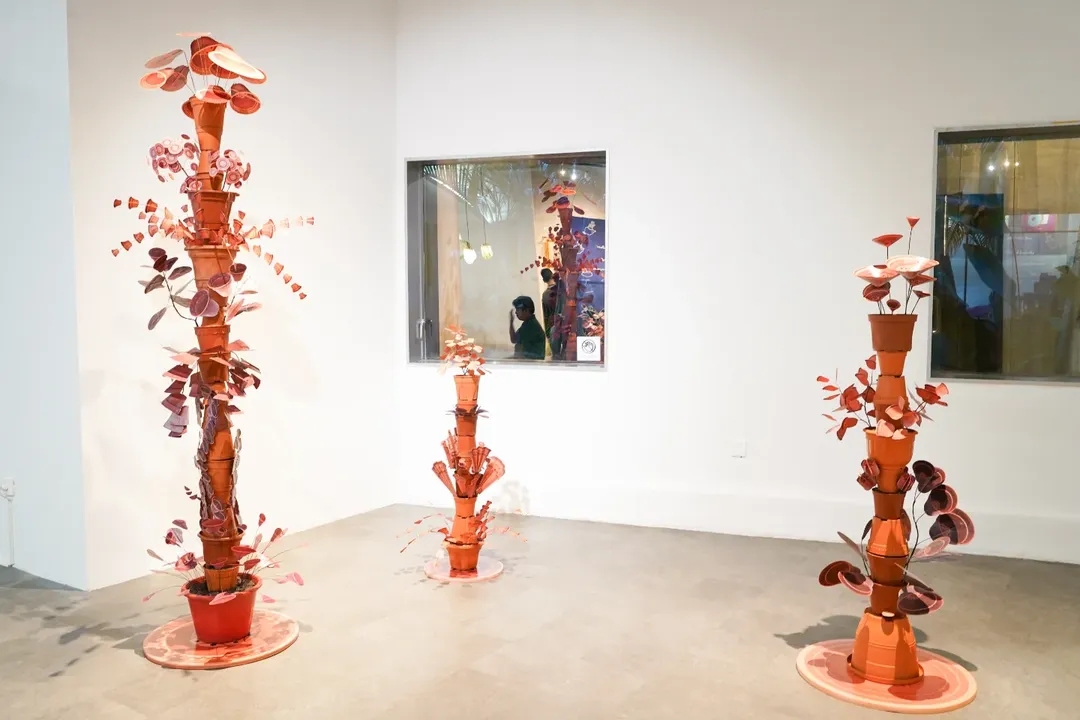
Reflections on the relationship between humans and life also appear in the work of Cynthia Delaney Suwito through an installation from her Pottered Pots series. The work is inspired by her personal experience of caring for potted plants that did not always survive. Cynthia collected pots from plants that had died and arranged them into a vertical tower reaching 2.2 meters in height. Instead of presenting living plants, she integrates photographic prints of the original pots into the installation structure, creating a quiet reflection on care, loss, and memory.
Overall, Biophilia: Exquisite Corpse positions art as a space for reflection and as a subtle form of advocacy for sustainability. The exhibition does not aim to offer instant solutions. Instead, it opens a conversation about how humans can build a more responsible and caring relationship with the earth. The exhibition runs until April 16, 2026 at ISA Art Gallery, Wisma 46, Jakarta, and is open to the public from Tuesday to Saturday, from 11.00 am to 6.00 pm.
photo source: instagram.com/isaart.id and instagram.com/cynthiadsuwito
#biophilia exquisite corpse exhibition #isa art gallery jakarta #ecological art exhibition #environmental themed exhibition #global ecological crisis #relationship between humans and nature #sustainability in contemporary art #collaborative art exhibition #surrealist collaborative method #exquisite corpse method #contemporary art installation #textile art installation #experimental art materials #kendeng community struggle #kupatan kendeng ritual #environmental awareness through art #household waste reflection #ecological reflection in art #sustainability art dialogue #contemporary artists exhibition jakarta #media #article #rsvp clique #rc
