


RUNNING TRAIN: INDONESIA BUILT THE TRAIN GAME JAPAN WANTED
Rizky Nova built Running Train alone in Surabaya. Japan thought it was theirs. Here is what the game means for Indonesia and for Japan.
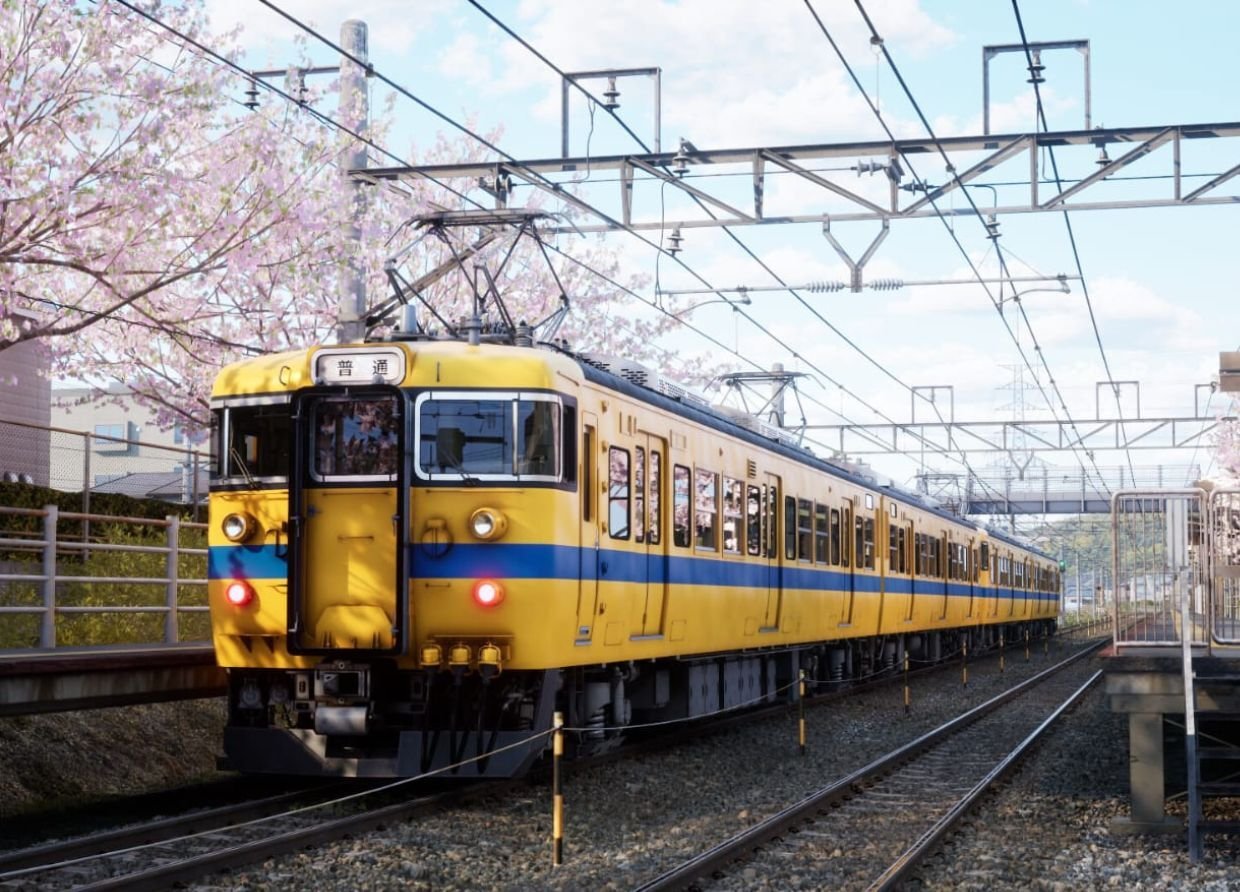
When Japanese players first encountered Running Train on Steam, many did not realize it was made by an Indonesian developer. The visuals were too detailed. The atmosphere was too accurate. The rural Japanese railway experience it recreated, complete with cherry blossom scenery, coastal views, mountain landscapes, and the specific quality of silence that belongs to a single-track line through the Japanese countryside, felt like something that could only have come from inside Japan.
It came from Surabaya.
RUNNING TRAIN, also known as 走ル列車!, was developed by Novatetsu Games, an indie studio from Surabaya, East Java. The developer behind the studio is Rizky Nova, also known as Rizu, a solo developer who handled almost every aspect of the game independently, from programming and environment design to 3D modeling and animation, over several years of development before the Steam page ever went live.
The most telling confirmation of how convincing Running Train is came from Simulation Daily, one of the most respected simulation game publications in the world. When they first published their coverage, they described the developer as "a solo Japanese developer named Rizu based in Japan." The correction came later. The assumption lasted long enough to confirm what Rizky Nova had built: something indistinguishable from the real thing, even to the people who cover the genre professionally.
What Running Train Is and Why Japan Could Not Look Away
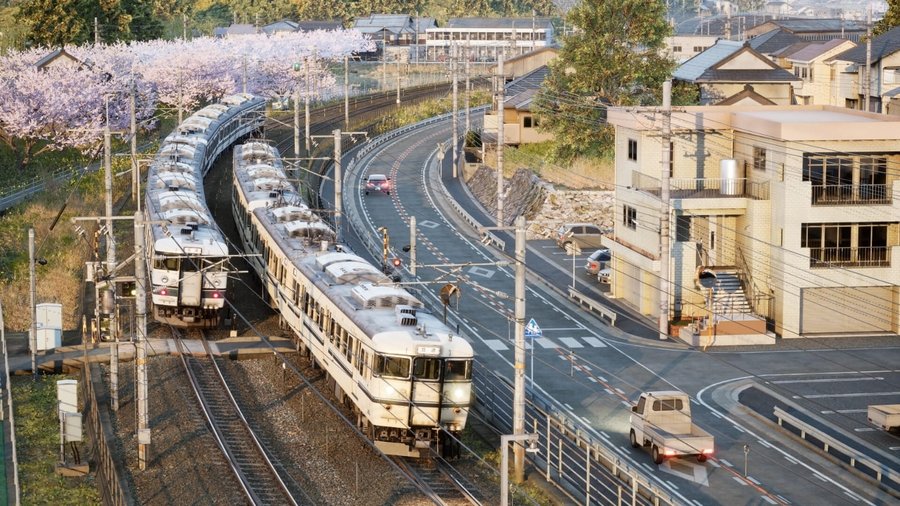
Hayamori Railway and Kofuku Railway. Sakura in spring. Built by one developer in Surabaya.
Running Train places players inside a train operator's cabin as they navigate more than 40 kilometers of detailed track across the fictional Hayamori Railway and Kofuku Railway. The environments are inspired by rural Hiroshima, with countryside villages, mountains, coastal areas, and cherry blossom details built using Unreal Engine 5 for real-time 3D visuals, not pre-rendered video.
The game features more than 40 diagrams covering both local and express trains, with operation available across three time periods: early morning, afternoon, and nighttime. Two seasons are available: Sakura Spring and Snowy Winter. Dynamic weather runs throughout both seasons. For players who want to drive, there is a standard mode and a Hard Mode with no speed indicator for the serious simulator audience. For players who want to watch, there is a Free Mode and an AI auto-drive that turns the game into a moving window seat through the Japanese countryside. Photo Mode is available for the moments that deserve to be captured.
On Reddit's train simulator community, one user wrote: "This is what a train sim should look like in 2026." Kotaku described Running Train as one of the most realistic train simulators ever made by a solo developer. Automaton, the respected Japanese games publication, covered the game and reported overwhelmingly positive reactions. Yahoo Japan News covered it via Game*Spark.
On Steam, Running Train achieved an Overwhelmingly Positive rating with 710 reviews at 98 percent positive, with many reviews written in Japanese. Many Japanese players initially assumed the project was developed by a domestic studio. When they discovered it was built by a single developer in Surabaya, the response across Japanese gaming communities was not disappointment. It was admiration.
The name Novatetsu is a combination of the founder's name, Nova from Rizky Nova, and the Japanese word tetsu, meaning iron or iron train, as in the word tetsudo meaning railway. That naming choice reflects something deliberate: Rizky Nova has been active in Japanese game developer and train simulator communities for years under the name Rizu, building his reputation and his skills long before launching his first commercial title.
What Running Train Means for Indonesia and for Japan
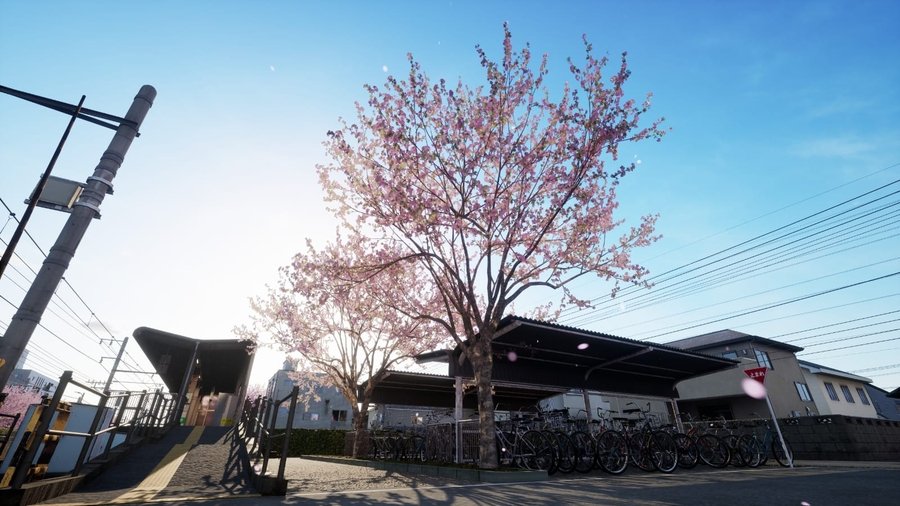
The Sakura Spring season in Running Train. Built in Unreal Engine 5 by one developer in Surabaya.
For Indonesia, Running Train is proof of something the Indonesia Animation Report 2026 has been arguing in data: that the country's creative and technical talent is ready for the global stage. Not as a recipient of international pop culture but as a producer of it. Running Train did not celebrate Indonesia. It celebrated Japan, with such accuracy and care that Japan celebrated it back. That is a different and more significant form of soft power than most government cultural programs could manufacture.
For young Indonesian game developers watching from the outside, the message is specific: the gap between a solo developer in Surabaya and a product that Japanese gaming communities, international simulation media, and Kotaku praise without qualification is closable. Rizky Nova closed it alone, over several years of work that nobody was watching until the Steam page went live.
For Japan, Running Train represents something equally significant. A developer from another country studied Japanese rural railway culture closely enough to recreate it with accuracy that feels like love rather than approximation. The Japanese gaming community's response, admiration rather than critique, reflects the recognition that what Rizky Nova built was not an appropriation of Japanese aesthetics but a genuine tribute to them. The fact that even Simulation Daily initially classified Rizu as a Japanese developer is the most credible confirmation of that: the game does not just look Japanese. It feels Japanese.
Novatetsu Games has published a detailed Early Access roadmap. A passenger system and Passenger POV mode are scheduled for Q3 to Q4 of 2026, well ahead of the full version release in Q2 to Q4 of 2027. The full version will expand the Hayamori Line to 80 to 100 kilometers with new routes and a conductor feature. The Early Access version at 40 kilometers and 710 reviews is already doing what it is doing. The full version will be twice the size, with passengers on board.
You Might Also Want to Read
Grafis Nusantara: The TDC72 Finalist Born in a Thrift Shop — rsvpclique.com
One Game. One Developer. Two Countries Proud.
Running Train by Novatetsu Games is available now on Steam Early Access at USD 17.99, rising to USD 19.99 after the launch period. In Japan, the game is priced at 2,682 yen during the launch discount, rising to 2,980 yen. Overwhelmingly Positive on Steam with 710 reviews at 98 percent positive. Passenger system and Passenger POV mode coming Q3 to Q4 2026. Full version scheduled for 2027 with 80 to 100 kilometers of the Hayamori Line. Follow @rts_trainsim for updates.
Sources of Photos
Novatetsu Games Twitter — @rts_trainsim
Frequently Asked Questions
#Running Train #Rizky Nova #Novatetsu Games #Steam Early Access #Unreal Engine 5
