


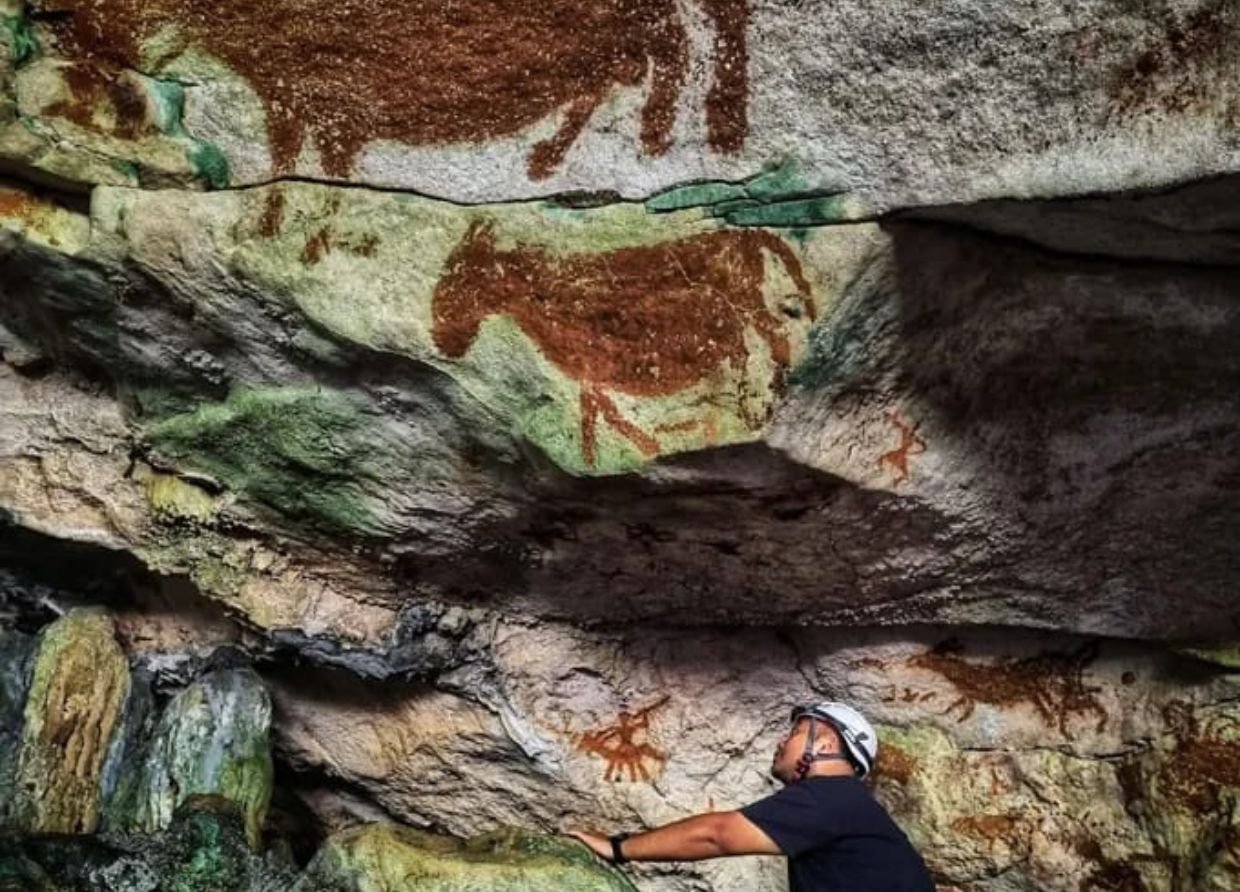
GUINNESS WORLD RECORDS CONFIRMS INDONESIA'S OLDEST CAVE ART
Guinness World Records officially named Indonesia home to the world's oldest cave art. Liang Metanduno, Sulawesi. 67,800 years. Here is the full record.
Guinness World Records has officially recognized a cave on Muna Island in Southeast Sulawesi as home to the world's oldest non-figurative painting. The record, titled Oldest Painting: Non-Figurative Art, was awarded to the research team behind the discovery of a hand stencil inside Liang Metanduno on Muna Island, dated to a minimum of 67,800 years using uranium-series analysis of calcite layers above the pigment.
The GWR certificate was presented to lead researcher Dr. Adhi Agus Oktaviana at a ceremony held on Tuesday May 19, 2026 at BRIN Headquarters in Jakarta, coinciding with the BRIN Goes to Industry 4 event. The research findings were published in the scientific journal Nature on January 21, 2026, led by Dr. Adhi Agus Oktaviana of @brin_indonesia alongside Professor Adam Brumm and Professor Maxime Aubert of Griffith University Australia, with contributions from a number of other experts.
The finding places the Muna hand stencil 16,600 years older than the Maros-Pangkep cave art in South Sulawesi, and 1,100 years older than hand stencils in Spain attributed to Neanderthals.
What the Record Actually Is
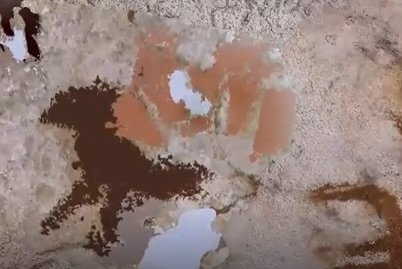
The hand stencil at Liang Metanduno.Fingers shaped into claw-like forms. Sixty-seven thousand eight hundred years old
Guinness World Records recognized Liang Metanduno specifically under the category Oldest Painting: Non-Figurative Art, which covers the oldest confirmed instance of a human using a visual mark that is not a direct representation of a figure or object. The hand stencil at Liang Metanduno qualifies because it was deliberately modified, fingers shaped into claw-like forms, transforming a handprint into something beyond a simple outline.
That transformation is what makes the record significant. Older marks exist in the archaeological record but they are geometric and unmodified. The modified hand stencil at Liang Metanduno demonstrates that the person who made it had a mind capable of taking one thing and intentionally making it mean something else. That cognitive act, representation through deliberate modification, is the earliest confirmed evidence of it in human history.
The hand stencil measures 14 by 10 centimeters, portions of fingers and a palm, pressed against limestone and sprayed with red pigment. The research team documented 44 sites across Southeast Sulawesi including 14 previously unknown locations, dating 11 individual motifs across eight caves. The Muna hand stencil is the oldest of all of them.
"What we are seeing in Indonesia is probably not a series of isolated surprises, but the gradual revealing of a much deeper and older cultural tradition that has simply been invisible to us until recently," said Maxime Aubert of Griffith University.
Professor Maxime Aubert served not only as co-lead researcher and dating specialist on the study but also as the photographer who documented the team's work inside Liang Metanduno. The photographs of the hand stencil and the research team that Reuters and AP distributed worldwide on January 21, 2026, were taken by Aubert inside the cave. The photograph of Dr. Adhi Agus Oktaviana examining the cave wall was taken by Aubert and released via AP. The photograph of Aubert himself examining the cave painting was taken by Dr. Adhi Agus Oktaviana and released via Reuters. Each image was the other researcher's documentation of the moment. Two scientists, one cave, the oldest confirmed painting in human history, and the cameras they brought with them.
What This Means for Indonesia
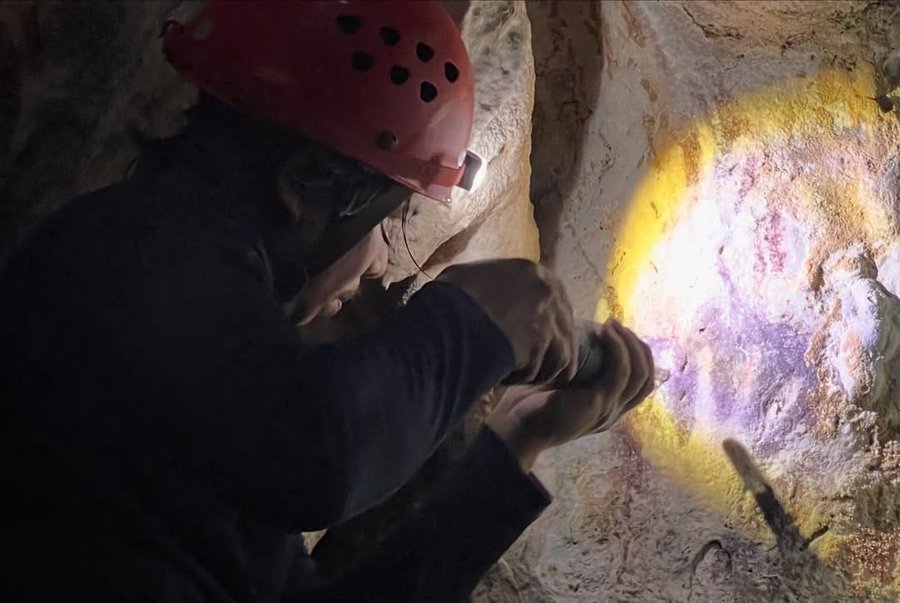
Liang Metanduno, Muna Island. The research team documented 44 sites across Southeast Sulawesi. This cave held the oldest of all of them.
The discovery adds to growing evidence that early human creativity did not arise in a single place or remain confined to Ice Age Europe. Symbolic behavior such as art, storytelling, and identity marking was already well established in Southeast Asia as humans spread across the world.
For decades, the dominant narrative placed the birth of symbolic human thought in the caves of France and Spain. Liang Metanduno moves that origin point to an island in Southeast Sulawesi, 67,800 years in the past.
 Dr. Adhi Agus Oktaviana GWR certificate BRIN Jakarta May 19 2026 oldest painting non-figurative art
For Indonesia, the record means something specific. It places Nusantara not as a recipient of civilization but as one of its earliest sources. The oldest confirmed evidence that humans could think symbolically, that they could take a hand and make it mean something beyond itself, was found in a limestone cave on a tropical island in what is now one of the most biodiverse and culturally layered archipelagos on Earth.
The GWR certificate presented to Dr. Adhi on May 19 at BRIN Headquarters is the official confirmation of what the research already proved: the oldest painting in human history is Indonesian. That is not a regional distinction. It is a global on
You Might Also Want to Read : Indonesia's Three Geoparks Win UNESCO Green Card 2026
Sources of Photos
All photography from the Guinness World Records ceremony and Liang Metanduno research documentation was sourced from official Guinness World Records Indonesia accounts.
Guinness World Records Indonesia Official Instagram — @gwr.indonesia
Photography by Maxime Aubert via AP — Released January 21, 2026 [AP Coverage — apnews.com]
Frequently Asked Questions
#Liang Metanduno #Muna Island #Sulawesi #Guinness World Records #BRIN #Adhi Agus Oktaviana #Maxime Aubert #Indonesia
