


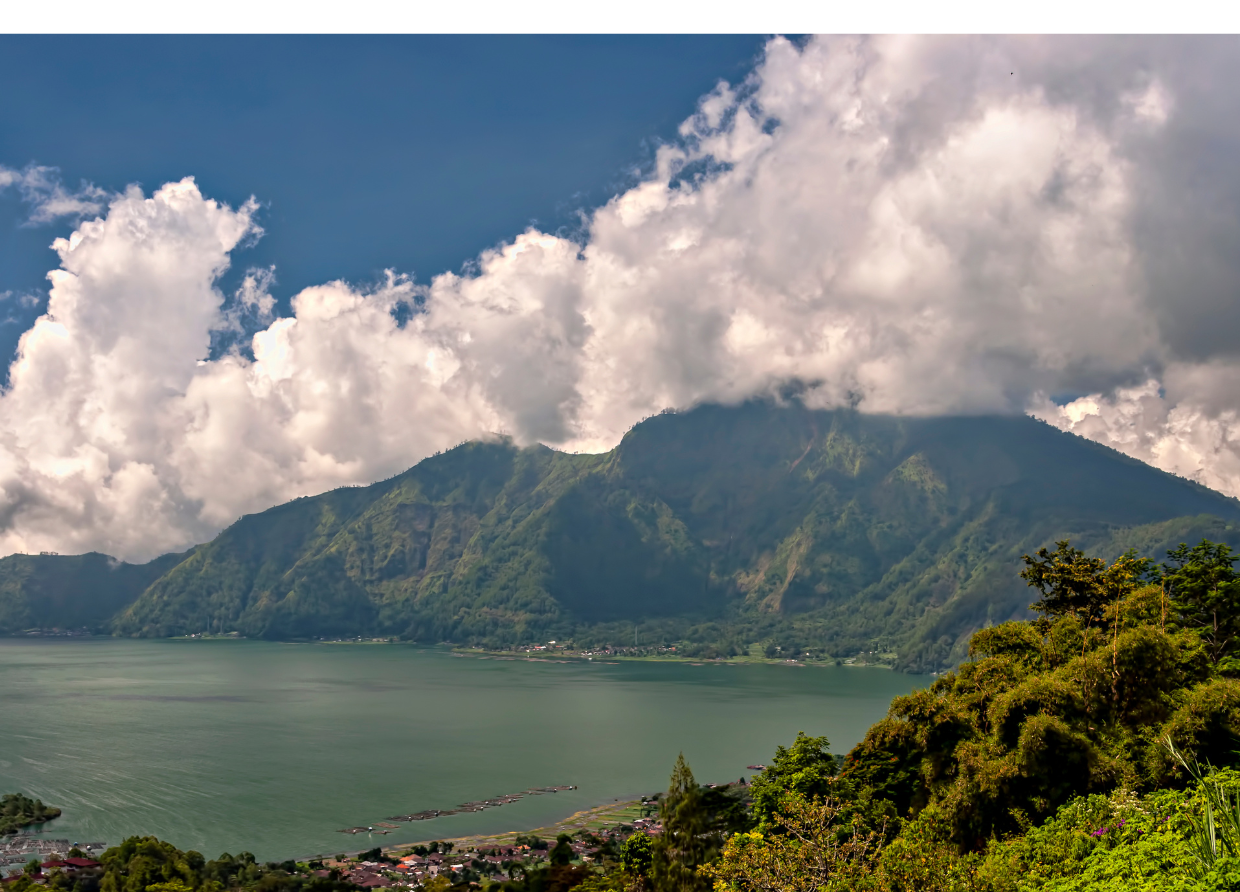
INDONESIA'S THREE GEOPARKS WIN UNESCO GREEN CARD 2026
Toba Caldera, Ciletuh-Palabuhanratu, and Rinjani earned UNESCO Green Cards for 2026-2029, placing Indonesia third in the world with 12 UNESCO Global Geoparks.
On April 30, 2026, a press statement from Kemendikdasmen confirmed what Indonesian conservationists had been working toward for years. Three of the country's UNESCO Global Geoparks had passed the revalidation process and received their UNESCO Green Card for the period 2026 to 2029.
The three geoparks are Toba Caldera UNESCO Global Geopark, Ciletuh-Palabuhanratu UNESCO Global Geopark, and Rinjani UNESCO Global Geopark. The announcement came during a UNESCO ceremony in Paris on April 30, 2026, where certificates were presented to 12 new UNESCO Global Geoparks from 10 countries and 38 existing geoparks from 24 countries that successfully passed revalidation.
What the UNESCO Green Card Actually Means and Why It Is Hard to Keep
The Green Card is the highest evaluation result in the UNESCO Global Geopark revalidation process. It is awarded to sites that have demonstrated sustained success in protecting geological heritage, running conservation and education programs, and delivering measurable economic benefit to the communities surrounding the geopark.
It is not a title granted once and held permanently. Every four years, each UNESCO Global Geopark undergoes a rigorous revalidation. The Green Card must be re-earned. A site that fails the process risks losing its UNESCO status entirely.
The result speaks for itself. Rinjani-Lombok, Toba Caldera, and Ciletuh-Palabuhanratu all passed the UNESCO revalidation process and retained their Green Card status for the period 2026 to 2029. Three sites. Three separate evaluations. Three consecutive passes.
That consistency is the point. The Green Card is not inherited. It is re-earned every four years through a process that measures geological heritage protection, public education programs, and the kind of economic benefit that reaches the communities actually living inside these landscapes. Indonesia passed all three at once.
Ananto Kusuma Seta, Chair of the Indonesian National Commission for UNESCO, stated: "As a country with the third most UGGps in the world, Indonesia has proven its ability to preserve and manage these sites for sustainable development. Congratulations and thank you to everyone who contributed to this proud achievement."
The Three Geoparks and What Each One Carries
Toba Caldera is one of the largest volcanic lakes on earth, formed by a supervolcanic eruption approximately 74,000 years ago. The caldera stretches 100 kilometres long and 30 kilometres wide, sitting in the highlands of North Sumatra with Samosir Island at its centre. Dr. Azizul Kholis, General Manager of Toba Caldera UNESCO Global Geopark, described the achievement as the result of collective effort across all levels of government and community: "We hope this achievement becomes momentum to strengthen the management of Kaldera Toba even further and deliver real benefits for local communities."
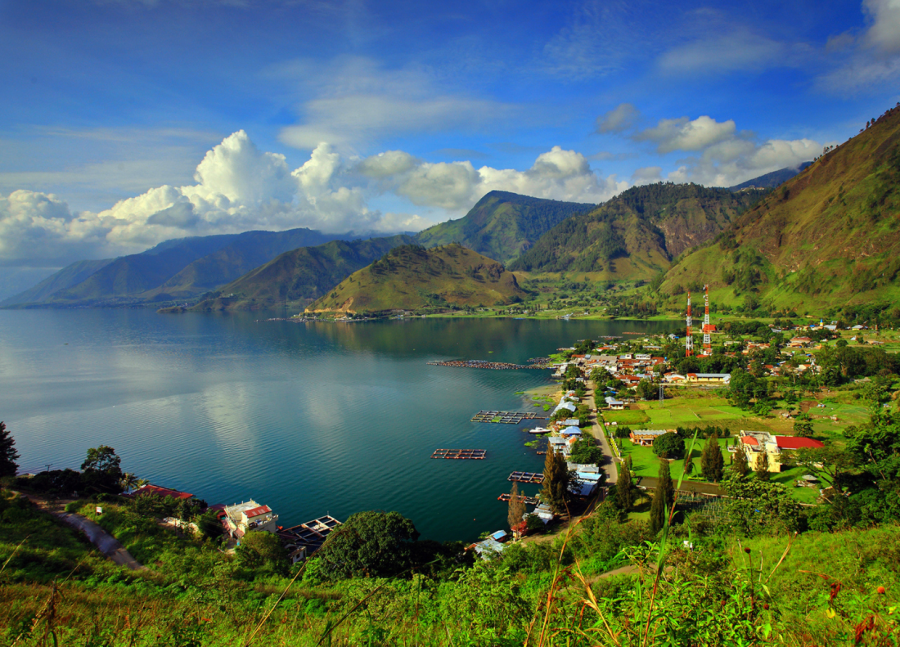
Aerial view of Lake Toba caldera, vast blue water surrounded by mountainous rim, morning mist over the lake surface
Ciletuh-Palabuhanratu in West Java holds some of the oldest exposed geological formations in Indonesia, with rock sequences dating back over 60 million years. The site combines dramatic coastal amphitheatre landscapes, waterfalls, and a working fishing community whose livelihood is tied directly to the health of the surrounding environment.
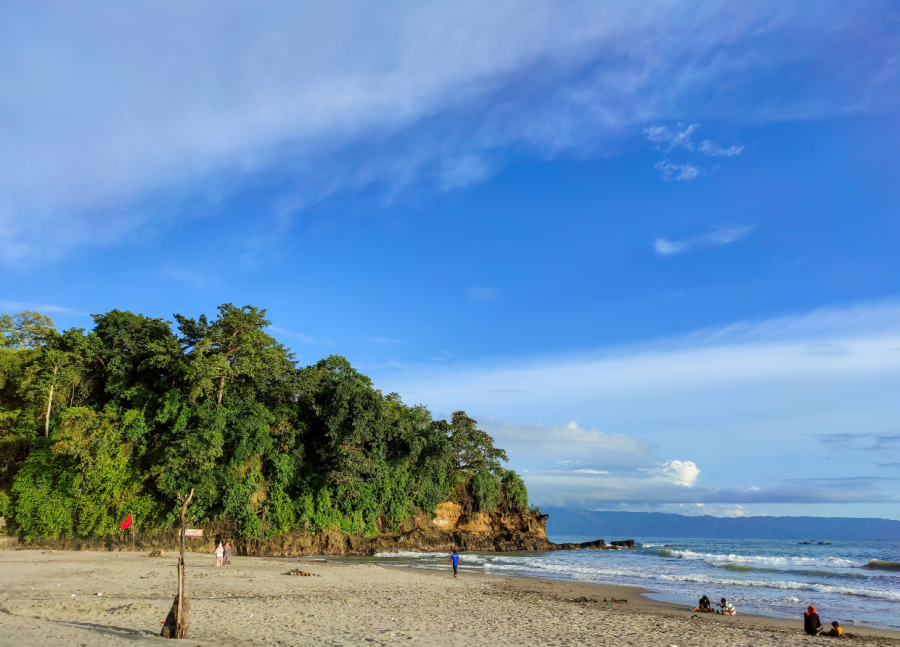
Ciletuh-Palabuhanratu in West Java. One of the oldest geological formations in Indonesia, now carrying its UNESCO Green Card into 2029
Rinjani-Lombok sits on an active stratovolcano that rises 3,726 metres above sea level, with a crater lake at 2,000 metres that is sacred to both the Sasak and Balinese Hindu communities. Managing an active volcano as a UNESCO Global Geopark is not a straightforward task. Holding the Green Card while doing it is the kind of achievement that does not get simplified into a single headline.
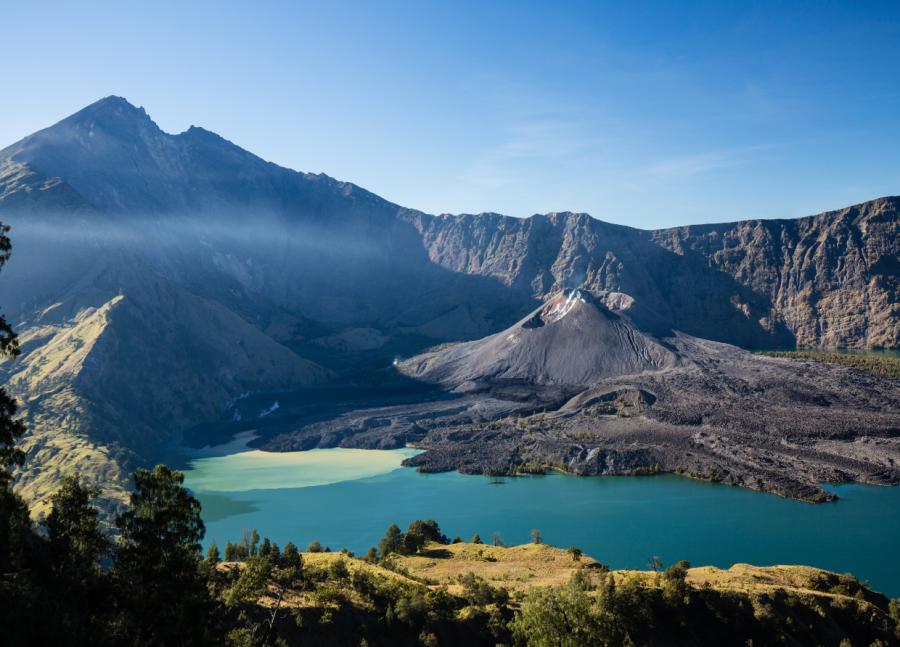
Gunung Rinjani and its crater lake. The active volcano at the heart of this geopark is also the reason UNESCO pays close attention to how it is managed
With 12 UNESCO Global Geoparks in total, Indonesia now sits third in the world by number of geopark sites, behind China and Spain, and equal with Italy. Globally, there are currently 241 UNESCO Global Geoparks across 51 countries.
Three geoparks. One revalidation cycle. A standing that places Indonesia alongside the geological stewards of China, Spain, and Italy. The Green Card is valid until 2029. The work that earns the next one begins now.
For more on Indonesia's UNESCO Global Geoparks, visit unesco.org.
Related: Indonesia Returns to Venice Biennale 2026 With 21 Etchings — rsvpclique.com
Sources of Photos
All photography related to Indonesia's UNESCO Global Geoparks was sourced from Getty Images via Canva
Frequently Asked Questions
#UNESCO Green Card 2026 #Toba Caldera #Ciletuh-Palabuhanratu #Rinjani #UNESCO Global Geopark #Indonesia #Ananto Kusuma Seta #Azizul Kholis #Paris #revalidasi #conservation #Lombok #Danau Toba #Samosir
